
Every AI automation agency shows you the result. The hours saved, the errors reduced, the FTEs held flat. The outcome slide is accurate. The three weeks it took to map the process, fix the data model, negotiate API access with the CRM vendor, and rebuild the thing twice when the edge cases appeared: that part doesn't fit in the slide. Which is fine. Slides don't have room for that.
AI automation consulting services cover strategy and execution. At minimum: process discovery, automation build, integration, testing, and handoff. A single workflow takes one to two weeks. A full suite of three to five connected automations takes four to six weeks. Cost runs $5,000-$50,000 depending on scope.
60% of organizations hit ROI within 12 months of automation implementation. The 40% that don't usually share one thing: they started building before they documented what they were building.
What AI automation consulting services actually deliver
The deliverable is running software, not a strategy document.
A proper AI automation and service engagement produces automations that run in your environment, connect to your tools, and hand work off to your team. The consultant maps the process, builds the workflow, integrates with your existing systems, tests against edge cases, and hands off with documentation your team can maintain.
The services typically include:
- Process discovery and mapping: identifying which workflows are worth automating, in what order, based on volume, error rate, and business impact
- Automation build: connecting your tools (CRM, ERP, email, forms, support desk) through APIs and integration platforms
- Integration and testing: running the automation against real data before it touches live operations
- Handoff and documentation: handing over something your team can monitor, adjust, and extend without going back to the consultant for every change
The engagements that fail skipped one of those steps. Usually the last two.
How an AI and automation service engagement works
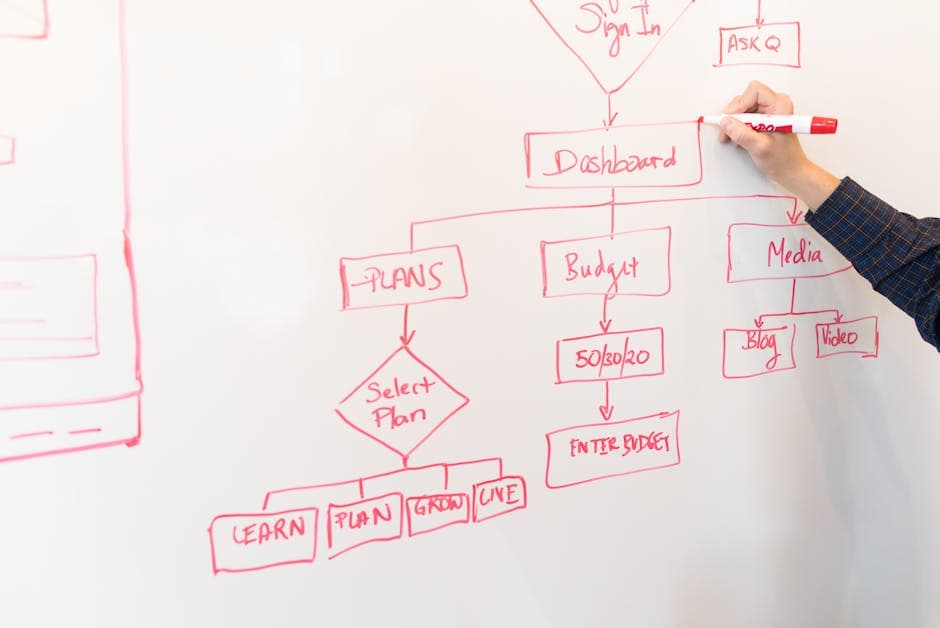
A standard AI automation services engagement runs in three phases.
Phase 1: Discovery and audit (days 1-5)
The consultant maps your current workflows, interviews the people who run them, and identifies the five to ten highest-impact automation candidates. The output is a prioritized list with an effort estimate for each item. If a firm skips this phase or charges nothing for it, that's a flag. Discovery is where the complexity lives.
Phase 2: Build and test (days 6-14 for a single automation, weeks 3-6 for a suite)
The consultant builds the automations, connects them to your live systems in a staging environment, and runs them against real data. Edge cases matter here. An automation that works 95% of the time still breaks 5% of the time. At volume, that 5% becomes a support ticket queue.
Phase 3: Deploy and handoff (days 14-20)
The automation goes live. The consultant hands over documentation, monitoring setup, and a brief training session. A good handoff means your team can adjust the logic, add conditions, and troubleshoot failures without calling the agency back.
For a detailed look at the firms doing this work and how to compare them, our guide to the best AI consulting firms for business process automation covers the evaluation criteria in depth.
The processes worth automating first
Most AI automation services guides give abstract criteria: high volume, low complexity, rule-based. Correct and useless.
The specific processes that pay off fastest:
Lead routing and follow-up: a new lead arrives in a form, gets scored, assigned to the right rep, and receives a first message. All within 90 seconds, at any hour. Response time is the primary variable in lead conversion. Most businesses handle this manually.
Invoice and document processing: invoices arrive by email in multiple formats. The automation extracts line items, matches them to purchase orders, flags discrepancies, and routes clean invoices for approval. Manual invoice processing costs $12-15 per invoice on average. Automated costs $3-4.
Support ticket triage: incoming tickets get classified by type and urgency, matched to the right team or template, and either resolved automatically or escalated with context already filled in. 65% of support queries resolve without human intervention when the triage logic is right.
CRM data entry: sales reps log calls manually, update deal stages, and fill in contact fields. An automation writes all of it from call transcripts and email threads. Sales reps spend roughly a third of their workday on administrative duties. The automation handles that third.
Any of these running more than 20 times per day pays back within 60-90 days.
What AI automation agency services cost

Pricing follows scope, not hours.
A scoped pilot (one automation, defined inputs and outputs, existing tools) runs $5,000-$15,000. A single automation build takes one to two weeks. That covers discovery, build, testing, and handoff.
A full suite of three to five connected automations runs $20,000-$50,000 and takes four to six weeks from scoping to live. Enterprise-scale programs with custom integrations, compliance requirements, and multi-team rollouts run higher.
Monthly managed services, where the agency monitors and extends the automations over time, run $1,500-$5,000 per month depending on volume and complexity.
The ROI math is direct. An automation saving 10 hours per week at $25 per hour saves $13,000 per year. A $10,000 pilot pays back in ten months. At 20 hours saved per week, it pays back in five.
75% of firms report 20-30% cost reduction in administrative functions after automating them. The businesses that hit that number documented their processes before they built.
At Fluxrivet, a single automation build runs one to two weeks and a full connected suite runs four to six weeks. The services page covers what's in scope for each engagement type.
How to evaluate an AI automation agency
The right evaluation question is not "what do you automate?" It is: what did the last project actually require that wasn't in the original scope?
A firm with no answer either hasn't shipped anything or is about to find out on your project. A firm with a specific answer ("the vendor's API changed schema without notice mid-build and we rebuilt the extraction layer") has shipped something and learned from it.
Other questions worth asking:
- Show me a case study from my industry with a documented before-and-after metric.
- How do you handle a failing automation at 11pm when no one is watching?
- Do you hand off documentation, or do we come back to you for every change?
- What's the exit plan if we want to bring the automations in-house?
A firm that can't answer any of those without hesitation is selling strategy, not execution.
For AI automation services in CRM and customer data, see our CRM automation services. For conversational automation, see intelligent chatbot services.
When you don't need AI automation consulting services
If the process runs fewer than 10 times per day, the economics don't work. The automation costs more to build than it saves in year one.
If the data is inconsistent (duplicate records, mismatched field formats, no standard naming convention), the automation runs on garbage and produces garbage faster. A month cleaning the data model is a better first investment than any build.
If there's no clear owner for the automation after handoff, it will drift. No one updates the logic when the process changes. It breaks quietly over months and your team works around it manually, having forgotten the automation exists.
And if the process changes frequently (quarterly pricing rules, seasonal workflow shifts, product-specific conditions that evolve), a no-code tool your team controls often beats paying an agency to rebuild it every quarter. Zapier and Make are real options for that tier of work. We say this even though we compete with them on the next tier up.
For businesses where the processes are stable, documented, and run at volume, AI automation services deliver within 60-90 days. For businesses not yet there, a process audit is the right first step, not a build.
Frequently asked questions
What do AI automation consulting services include?
Strategy, build, and handoff. The consultant maps your workflows, identifies the highest-value automation candidates, builds the integrations, tests against real data, and hands over a running system with documentation. Some firms also offer ongoing managed services where they monitor and extend the automations over time.
How much do AI automation consulting services cost?
A single scoped automation pilot runs $5,000-$15,000. A suite of three to five connected automations runs $20,000-$50,000 and takes four to six weeks. Enterprise-scale programs run higher. Monthly managed services run $1,500-$5,000 per month. The payback period for a well-scoped automation is typically 60-90 days.
What ROI can I expect from AI automation consulting?
60% of organizations achieve ROI within 12 months. 75% report 20-30% cost reduction in the automated functions. The businesses that hit those numbers documented their processes before building. The 40% who don't hit 12-month ROI typically started with unclear scope or dirty data.
How long does an AI automation engagement take?
A single automation: one to two weeks from scoping to live. A suite of three to five: four to six weeks. Enterprise programs with custom integrations and compliance requirements: three to six months. Discovery alone takes three to five business days for a medium-complexity process.
What is the difference between AI automation services and traditional IT consulting?
Traditional IT consulting designs architecture and hands off a spec document. AI automation services build and hand off running software in your environment. The engagement is shorter (weeks versus months) and the output is measurable from day one.
How do I evaluate an AI automation agency before signing?
Ask for a case study with documented before-and-after metrics from your industry. Ask what wasn't in scope on the last project and how they handled it. Ask how they monitor for failures and what the response process looks like. Ask what the exit looks like if you want to bring the automations in-house. Any firm that can't answer those questions clearly hasn't shipped enough.
What percentage of AI automation projects fail to deliver ROI?
40% of organizations don't hit ROI within 12 months of automation implementation. The common causes: scope defined too broadly at the start, data quality problems discovered mid-build, and no clear owner post-handoff. A well-scoped pilot with a single automation and a documented process avoids all three.
When does a business NOT need AI automation consulting services?
When the process runs fewer than 10 times per day, the cost usually outweighs the savings in year one. When the underlying data is inconsistent, automation accelerates the problem. And when the process changes frequently, a no-code tool you maintain yourself is often cheaper than paying an agency to rebuild it every quarter.
If you want to map which processes in your business are worth automating and in what order, book a 30-minute scoping call. Most businesses can work out the priority list in that first conversation.